The first days at home with a newborn
The first days are not much like what you imagine: lots of sleep in short stretches, feeds at all hours and the feeling of knowing nothing. Almost everything that worries you is normal, and what is not has clear signs.
Published on October 21, 2026.
Download on the App Store · iPhone
What is normal at the start
A newborn sleeps many hours a day, but in stretches of one to four hours, and wakes to feed. Feeds are frequent and follow no timetable. It is normal for them to cry for no clear reason, to make noises as they breathe and to startle at anything.
It is also normal for them to lose some weight in the first days and regain it by about two weeks. Your paediatrician or nurse keeps track. The skin may peel, and the umbilical cord usually falls off between the first and the second week.
What you will see in the nappy
The first poos are black and sticky, the meconium. Around the third or fourth day they turn greenish and then yellow. If you are breastfeeding, the number of wet nappies climbs as the milk comes in, around the third to fifth day, and it is normal for your breasts to feel hard in those days.
If you have doubts about breastfeeding, the midwife or a lactation consultant at the health centre will help; there is no need to put up with pain that does not improve. To know how many to expect each day, see how many nappies a baby uses.
First appointments and paperwork
In the first week or two, your health centre gives you the first paediatric visit, and the midwife usually checks the mother. Book as soon as the baby has a health card. If the heel-prick test was done in hospital, ask whether they have given you the result or when you will receive it.
The hospital reports the birth to the Civil Registry, normally within 72 hours. If it does not, you have 10 days to register it. After that come registering the baby at your address, getting their health card and applying for the birth benefit. None of these is for day one, but note them down with their dates.
Organising yourselves between the two of you
What wears you out most is not sleeping. Try splitting the night into stretches, so each of you gets at least four hours in a row. Whoever is off shift puts in earplugs and sleeps.
In the day, one rule: one thing per shift. A shower, a load of washing, a phone call. If someone comes to visit, they should bring food or put a wash on, and stay a short time. Messages about who is coming and when are best handled by just one of you.
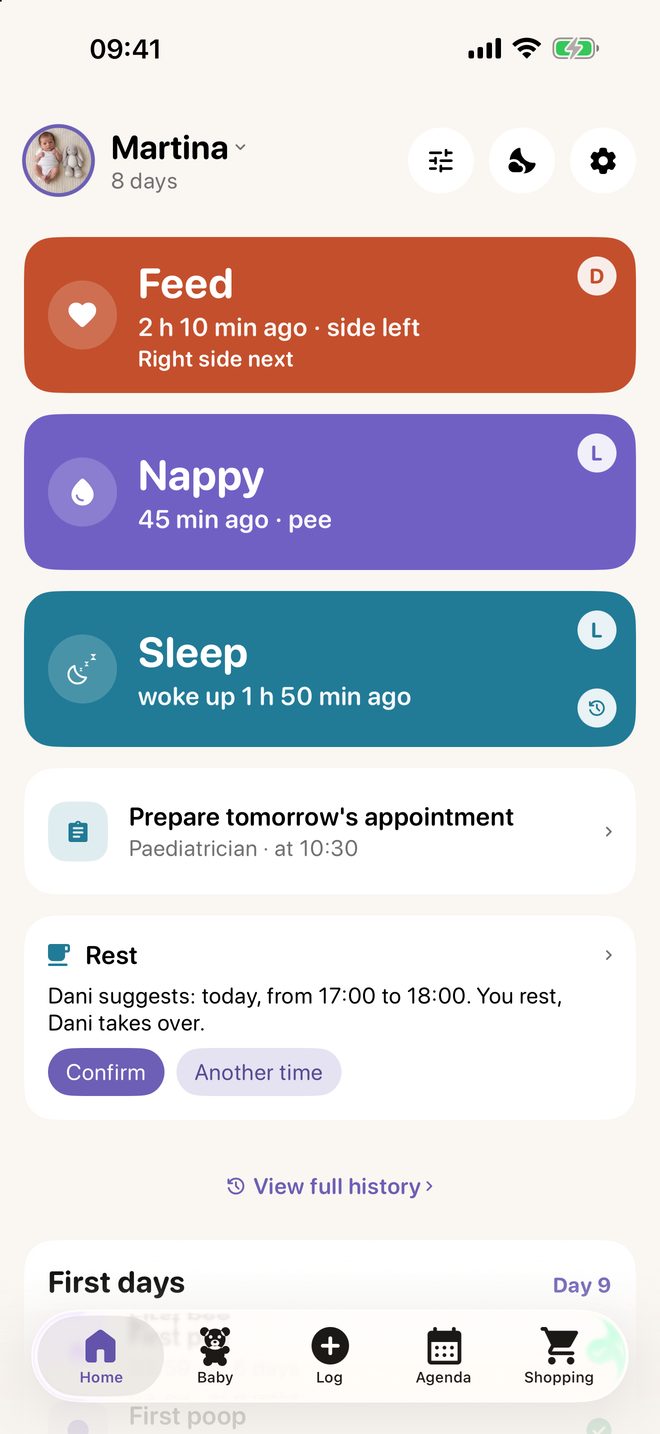
Noting in one place when they last fed, which nappy and when they slept avoids the "did you give them that already?" at four in the morning, and your paediatrician will be glad of it when they ask.
Safe sleep from day one
The Spanish Association of Paediatrics recommends putting them down on their back, on a firm, flat mattress, with a fitted sheet and no pillows, cushions, soft toys or loose blankets. It is best if they sleep in their own cot or Moses basket, in your room, for the first months. Avoid letting them fall asleep with you on the sofa or in an armchair.
When to call or go to hospital
Talk to your paediatrician or ring the health centre the same day if they have no wet nappies, refuse several feeds in a row, are so sleepy they do not wake to feed or the yellow colour of the skin is increasing. With a temperature of 38 °C or more in a baby under three months, go to A&E.
Call 112 if they are breathing with difficulty, turning blue or not responding. Do not wait to see if it passes. More signs are in our article on when to go to A&E with a baby. If in doubt, call.
From pregnancy to the first days, on the same tab
When you tap "Ya ha nacido" (already born), the Home tab switches to feeds, nappies and sleep, and the next steps change to the birth paperwork with its dates. Each of you notes things from your own iPhone and the other sees them on theirs, without creating accounts (feeds, nappies and sleep). If the paediatrician asks, there is a PDF of the last 7 or 14 days.
Frequently asked questions
How much does a newborn sleep?
Many hours a day, but in short stretches of one to four hours, because they wake to feed. It is normal for them not to tell day from night for the first few weeks.
When does the umbilical cord fall off?
It usually falls off between the first and the second week. If it smells bad, oozes or the skin around it turns red, talk to your paediatrician or nurse.
When is the first visit to the paediatrician?
In the first week or two after discharge, at your assigned health centre. To book you need the baby's health card.
What do I do if my newborn has a fever?
In a baby under three months, a temperature of 38 °C or more is a reason to go to A&E, even with no other symptoms.
The essentials of Meceluna are free and have no ads.
Download on the App Store · iPhone