The first days at home with a newborn
The first days look little like what you imagine: lots of sleep in short stretches, feeds at all hours and the feeling that you know nothing. Almost everything that worries you is normal, and what is not has clear signs.
Published on October 21, 2026.
Download on the App Store · iPhone
What is normal at first
A newborn sleeps many hours a day, but in stretches of one to four hours, and wakes up to eat. Feeds are frequent and follow no schedule. It is normal for them to cry for no clear reason, to make noises when breathing and to startle at anything.
It is also normal for them to lose some weight in the first days and regain it by around two weeks. Your pediatrician or nurse keeps track of it. The skin may peel, and the umbilical cord stump usually falls off between the first and second week.
What you will see in the diaper
The first poops are black and sticky, the meconium. Around the third or fourth day they turn greenish and then yellow. If you breastfeed, the wet diapers climb in number as the milk comes in, around day three to five, and it is normal for your breasts to feel hard those days.
If you have doubts about breastfeeding, the midwife or a lactation consultant at the health center can help; there is no need to put up with pain that does not get better. To know how many to expect each day, see how many diapers a baby uses.
First appointments and paperwork
In the first week or two, your health center gives you the first pediatric visit, and the midwife usually checks the mother. Book as soon as the baby has a health card. If the heel prick test was done at the hospital, ask whether you were given the result or when you will get it.
The hospital notifies the Civil Registry of the birth, normally within 72 hours. If it does not, you have 10 days to register it. After that comes registering the baby at your address, getting their health card and applying for the birth benefit. None of these is for the first day, but note them down with their dates.
Organizing yourselves as a couple
What wears you out most is not sleeping. Try splitting the night into shifts, so that each of you gets at least four hours in a row. Whoever is off duty puts in earplugs and sleeps.
During the day, one rule: one single thing per shift. A shower, a load of laundry, a phone call. If someone comes to visit, they should bring food or put a load of laundry on, and stay a short while. Messages about who comes and when are best handled by just one of you.
Writing down in one place when the baby ate, which diaper and when they slept avoids the "did you already give it to them?" at four in the morning, and your pediatrician will appreciate it when they ask.
Safe sleep from day one
The Spanish Association of Pediatrics recommends laying the baby on their back, on a firm, flat mattress, with a fitted sheet and no pillows, cushions, stuffed toys or loose blankets. The best place is their own crib or bassinet, in your room, for the first months. Avoid letting them fall asleep with you on the sofa or in an armchair.
When to call or go to the hospital
Contact your pediatrician or call the health center the same day if the baby is not wetting diapers, refuses several feeds in a row, is so sleepy they do not wake to eat or the yellow color of the skin is getting worse. With a fever of 38 °C (100.4 °F) or more in a baby under three months, go to the emergency room.
Call 112 if they breathe with difficulty, turn bluish or do not respond. Do not wait to see if it passes. More signs in our article on when to go to the ER with a baby. If in doubt, call.
From pregnancy to the first days, in the same tab
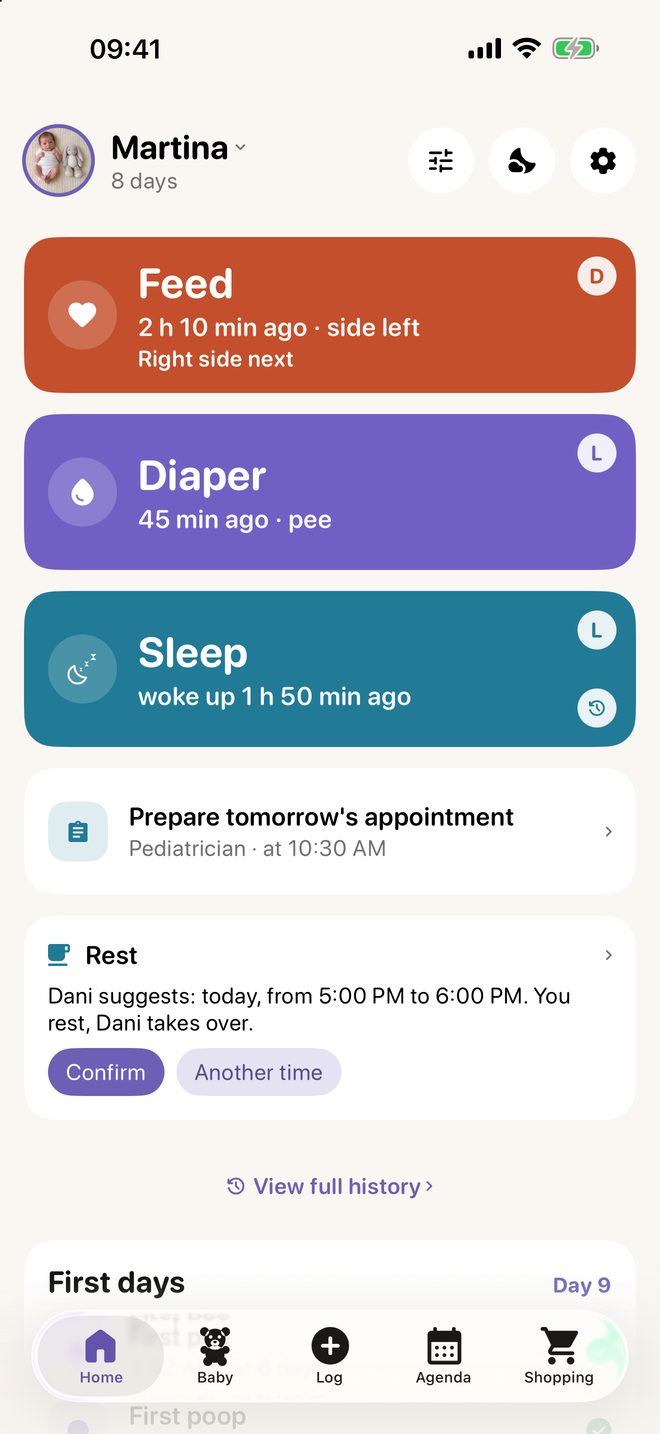
When you mark "Has been born", the Home tab switches to feeds, diapers and sleep, and the next steps change to the paperwork of the birth, with dates. Each of you logs from your own iPhone and the other sees it on theirs, with no accounts to create (feeds, diapers and sleep). If the pediatrician asks, there is a PDF of the last 7 or 14 days.
Frequently asked questions
How much does a newborn sleep?
Many hours a day, but in short stretches of one to four hours, because they wake to eat. It is normal for them not to tell day from night for the first weeks.
When does the umbilical cord stump fall off?
It usually falls off between the first and second week. If it smells bad, oozes or the skin around it turns red, check with your pediatrician or nurse.
When is the first visit to the pediatrician?
In the first week or two after discharge, at the health center assigned to you. To book you need the baby's health card.
What do I do if my newborn has a fever?
In a baby under three months, a temperature of 38 °C (100.4 °F) or more is a reason to go to the emergency room, even with no other symptoms.
The essentials of Meceluna are free and have no ads.
Download on the App Store · iPhone