Baby bottles: how to prepare them, clean them and how many to have
Four to six bottles, a couple of spare teats and a bottle brush are enough for the first few weeks. The delicate part is hygiene: clean hands, safe water and throwing away what is left at the end of the feed.
Published on November 6, 2026.
Download on the App Store · iPhone
How many bottles you need
If the baby has a bottle at every feed, count on 6 bottles, because a newborn feeds about 8 times a day and you will not always have time to wash between one and the next. If you are breastfeeding and the bottle will be a back-up (for when someone else looks after the baby, for example), 2 or 3 is plenty.
Start with a few, in the small size. Each baby accepts a different teat and it is easy to end up with four bottles they will not even look at. Buy one or two, try them and top up when you know which one they like. Teats wear out: replace them if they look sticky, split or with a bigger hole, and in any case every few months.
What is missing is in the baby list, with what you usually need before and after the birth.
How to make up a bottle with powdered milk
The tin of your milk has the exact measurements and those are the ones that count. A general method that follows the health authorities' recommendations:
- Wash your hands with soap and water and clean the surface where you are going to prepare it.
- Put the water in the bottle first, the amount shown on the tin or given by your paediatrician.
- Add the level scoops of powder that apply, without pressing down or heaping. More powder does not feed more: it makes the milk more concentrated and can upset the baby.
- Close, shake until there are no lumps and check the temperature by putting a few drops on the inside of your wrist. It should feel lukewarm, never hot.
On water, the WHO and food safety agencies advise making up the powder with boiled water that has cooled a little (around 70 °C), because the powder is not sterile. It is then cooled under the tap or in a bowl of cold water. If you use bottled water, it must be very low in minerals and suitable for babies, and it is also boiled. Ask at the health centre which water suits you in your area.

What is left over gets thrown away
Once the baby has started feeding, the milk becomes a breeding ground for bacteria. What is left at the end of the feed is thrown away and not kept for the next one. Make up the amount they are going to drink. If they always leave some, make a little less and keep more powder nearby in case they ask for more.
It is also warmed just before giving it. Avoid the microwave: it heats unevenly and can leave hot spots that burn the mouth even if the bottle seems lukewarm on the outside. A pan of hot water or a bottle warmer is enough.
If you need to go out with bottles, take the hot water in a flask and the powder measured out in a dispenser, and mix at the time.
How to wash and sterilise
Wash each bottle after every feed, without leaving it until the evening, because dried milk is harder to remove. Take all the parts apart: bottle, ring, teat and cap. Wash with hot water, soap and a brush that reaches the bottom, and rinse well. They dry upside down on a clean cloth or a drying rack. If the bottle says so, it can also go in the dishwasher.
The first time you use it, sterilise it: about 5 minutes in boiling water, or with a steam or microwave steriliser, if you already have one. After that, most paediatricians consider the daily wash with hot water and soap enough for a healthy baby, although for premature babies or in the first few months some recommend continuing to sterilise. Ask yours how long for.
Teats are cleaned carefully, squeezing them with your fingers under the water, and checked for cracks. A soft-bristled brush will last you months and is the purchase you will miss least.
What to do if they refuse it
It is common for a breastfed baby to refuse the first bottle. Try with another person (sometimes the mother's smell is distracting), with a different slow-flow teat or at a time when they are hungry but not too hungry. Keep trying in short spells, without forcing. If several days go by and the baby is barely feeding, or you notice fewer wet nappies than usual, speak to the midwife or the paediatrician.
The size of the hole matters. If the flow is too fast, they choke, cough or the milk escapes from the corner of the mouth. If it is too slow, they tire and fall asleep without finishing. Switch to the teat for the next age only when you see they are getting frustrated with the one they have.
The bottle in the log
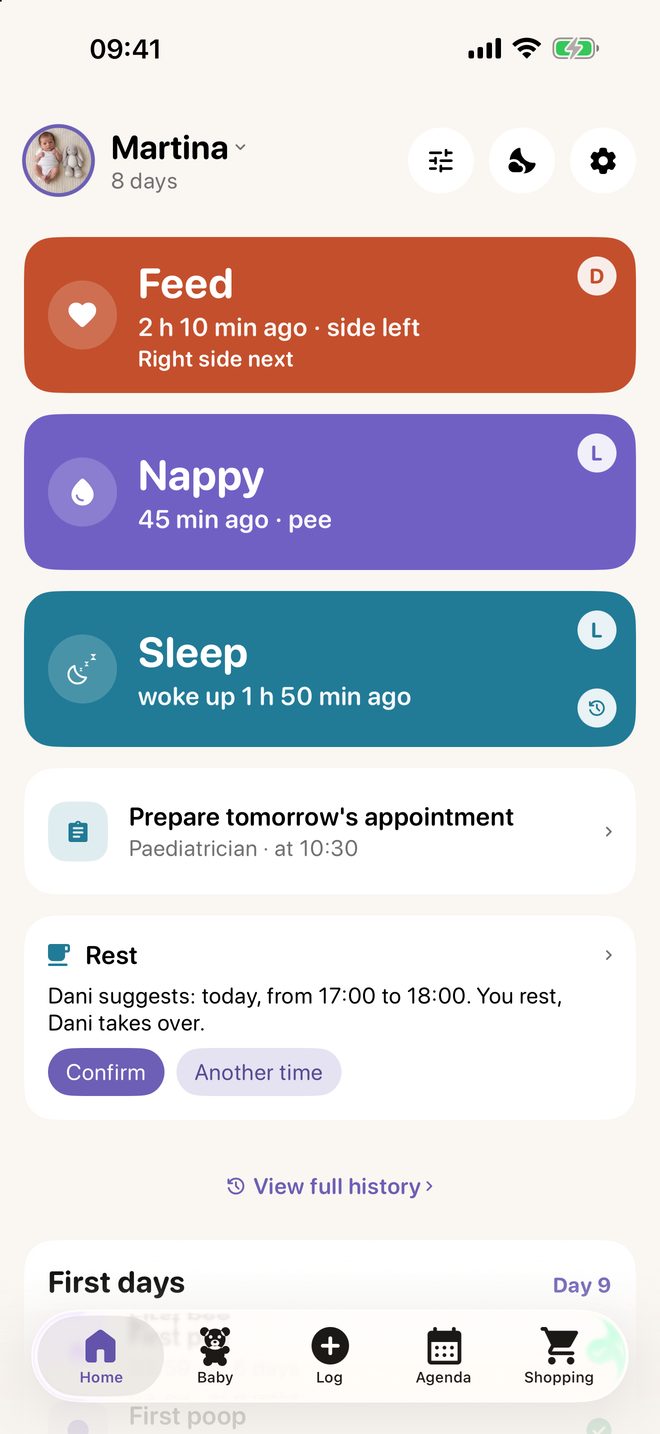
In Meceluna the bottle is logged with one tap, with its amount and the time, and the other person sees it on their iPhone. That way, whoever gets up in the early hours knows when the baby last fed without waking anyone to ask. If there is also a breast pump or a breastfeed, everything is in the same log. We explain it in feeds, nappies and sleep.
Frequently asked questions
How many bottles do I need for a newborn?
With exclusive formula feeding, about 6 bottles let you wash between feeds. If the bottle is only occasional, 2 or 3 is enough.
Do I have to sterilise the bottle every time?
The first time, yes. After that, for a healthy baby, washing it well with hot water and soap after each feed is usually enough. Ask your paediatrician how long to keep sterilising if the baby is premature or very small.
Can I keep a made-up bottle for the next feed?
Once the baby has started feeding, what is left is thrown away. If you want to prepare ahead, do it following the tin and your paediatrician's instructions, because the powder is not sterile.
Can I warm the bottle in the microwave?
Better not. It heats unevenly and can burn the baby's mouth even if the outside seems lukewarm. Use a pan of hot water or a bottle warmer.
The essentials of Meceluna are free and have no ads.
Download on the App Store · iPhone