Baby bottles: how to prepare, clean, and how many to get
Four to six bottles, a couple of spare nipples, and a bottle brush are enough for the first weeks. The delicate part is hygiene: clean hands, safe water, and throwing out what is left when the feeding ends.
Published on November 6, 2026.
Download on the App Store · iPhone
How many bottles you need
If the baby takes a bottle at every feeding, count on 6 bottles, because a newborn eats about 8 times a day and you will not always have time to wash between one and the next. If you breastfeed and the bottle will be a backup (for when someone else watches the baby, for example), 2 or 3 is plenty.
Start with a few and the small size. Every baby accepts a different nipple and it is easy to end up with four bottles the baby will not even look at. Buy one or two, try them, and complete the set once you know which one the baby likes. Nipples wear out: replace them if they look sticky, torn, or with a bigger hole, and in any case every few months.
What is still missing is in the baby list, with what you usually need before and after the birth.
How to make a bottle with formula
The tin of your formula has the exact measurements, and those are the ones that count. A general recipe that follows the recommendations of health authorities:
- Wash your hands with soap and water and clean the surface where you will prepare.
- Put the water in the bottle first, the amount the tin or your pediatrician indicates.
- Add the level scoops of powder that apply, without packing or heaping. More powder does not feed more: it concentrates the milk and can upset the baby's stomach.
- Close, shake until there are no lumps, and check the temperature by dripping a few drops on the inside of your wrist. It should feel lukewarm, never hot.
About the water, the WHO and food safety agencies advise preparing the powder with boiled water that has cooled a little (around 70 °C, 158 °F), because the powder is not sterile. Then you cool it under the tap or in a bowl of cold water. If you use bottled water, it has to be very low in minerals and suitable for babies, and it is boiled too. Ask at the health center which water suits your area.

What is left gets thrown out
Once the baby has started drinking, the milk becomes a breeding ground for bacteria. What remains at the end of the feeding is thrown out and not saved for the next one. Prepare the amount the baby will drink. If they always leave some, prepare a little less and keep more powder nearby in case they ask for more.
You also warm it right before giving it. Avoid the microwave: it heats unevenly and can leave spots that burn the mouth even if the bottle seems lukewarm on the outside. A pot of hot water or a bottle warmer is enough.
If you need to go out with bottles, bring hot water in a thermos and the powder measured out in a dispenser, and mix on the spot.
How to wash and sterilize
Wash each bottle after every feeding, without leaving it for the night, because dried milk is harder to remove. Take all the parts apart: bottle, ring, nipple, and cap. Wash with hot water, soap, and a brush that reaches the bottom, and rinse well. Dry them upside down on a clean cloth or a drying rack. If the bottle says so, it can also go in the dishwasher.
The first time you use it, you sterilize: about 5 minutes in boiling water, or with a steam or microwave sterilizer, if you already have one. After that, most pediatricians consider daily washing with hot water and soap enough for a healthy baby, although for preemies or in the first months some recommend continuing to sterilize. Ask yours how long.
Nipples are cleaned carefully, squeezing them with your fingers under the water, and checked for cracks. A soft-bristled brush will last you months and is the purchase you will miss the least.
What to do if the baby refuses it
It is common for a breastfed baby to refuse the first bottle. Try with another person (sometimes the mother's smell is a distraction), with a different slow-flow nipple, or at a time when the baby is hungry but not very. Keep at it in short stretches, without forcing. If several days go by and the baby barely eats, or you notice fewer wet diapers than usual, consult the midwife or the pediatrician.
The size of the hole matters. If the flow is too fast, the baby chokes, coughs, or lets milk escape from the corner of the mouth. If it is too slow, they tire out and fall asleep without finishing. Switch to the next age's nipple only when you see the baby getting frantic with the one they have.
The bottle in the log
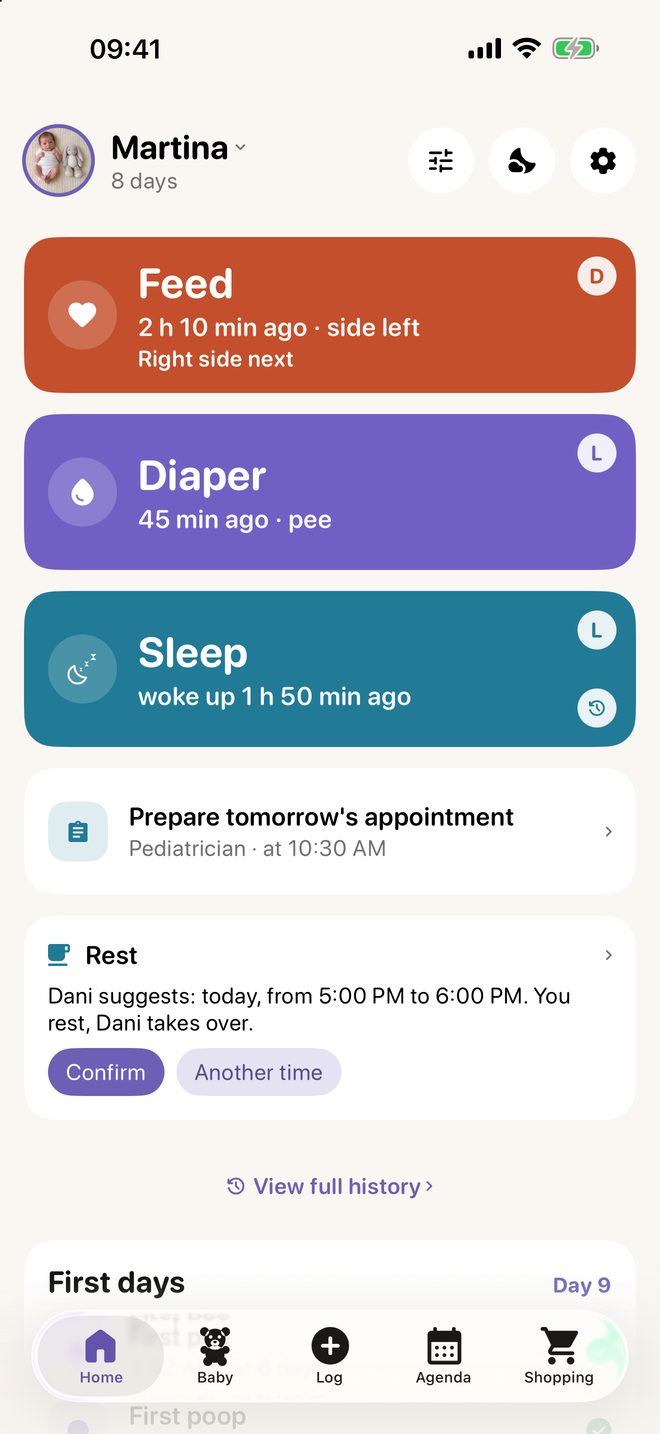
In Meceluna the bottle is logged with one tap, with its amount and the time, and the other person sees it on their iPhone. That way, whoever gets up in the early hours knows when the baby last ate without waking anyone to ask. If there is also a breast pump or breastfeeding, everything ends up in the same log. We explain it in feedings, diapers, and sleep.
Frequently asked questions
How many bottles do I need for a newborn?
With exclusive formula feeding, about 6 bottles let you wash between feedings. If the bottle is occasional, 2 or 3 is enough.
Do I have to sterilize the bottle every time?
The first time, yes. After that, for a healthy baby, washing it well with hot water and soap after each feeding is usually enough. Ask your pediatrician how long to keep sterilizing if the baby is premature or very small.
Can I save a prepared bottle for the next feeding?
Once the baby has started drinking, what is left gets thrown out. If you want to prepare ahead, do it following the instructions on the tin and from the pediatrician, because the powder is not sterile.
Can I warm the bottle in the microwave?
Better not. It heats unevenly and can burn the baby's mouth even if the outside seems lukewarm. Use a pot of hot water or a bottle warmer.
The essentials of Meceluna are free and have no ads.
Download on the App Store · iPhone