First-year milestones: what usually arrives each quarter, without comparing
A baby sits between 6 and 9 months and walks between 8 and 18: the margins are enormous. These milestones give an idea of what usually comes, and they are not an exam.
Published on November 13, 2026.
Download on the App Store · iPhone
How to read milestones
A milestone is something most babies do around a certain age, within a range of several months either side. One child sitting at 6 months and another at 9 is perfectly normal. What a paediatrician looks at is the overall direction: that your baby keeps gaining skills, not the exact date of each one.
If your baby was born before 37 weeks, take away the time they came early: age is counted as corrected age until about two years. There is more on this in corrected age for premature babies.
What helps development most is everyday life: talking to your baby, singing, playing with them on the floor, giving them free time to move and not keeping them for many hours in a row in bouncers or seats. You do not need expensive toys or special stimulation.
And avoid comparing with a friend's child or with what you see on social media. A child who takes longer over one skill often gets ahead in another.
From 0 to 3 months
Around 6 to 8 weeks comes the social smile, the first real response to your face. Your baby looks at faces and follows an object with their eyes, starts to make soft sounds and, on their tummy, lifts their head a little. By about 3 months they hold it better, open their hands and look at them.
They will sleep many hours spread across day and night. At this stage there are no schedules yet, and that is normal.
From 3 to 6 months
Laughs appear, along with babbling with vowels and the wish to grab whatever is near. Around 4 to 6 months they roll from tummy to back, and later the other way round. They push up on their arms, put objects in their mouth and recognise their name. By about 6 months many can stay sitting with help.
It is a good time for tummy time, which strengthens the neck and back. In Meceluna you will find it as Tummy time.
From 6 to 9 months
They sit without support, often between 6 and 9 months, shuffle or crawl (some skip crawling and that is fine), pass a toy from one hand to the other and start to babble with consonants, the famous «ba-ba» or «ma-ma». Stranger anxiety appears, which means they recognise the people they depend on.
With the start of solid foods, they begin to pick up food with their fingers. You will find the topic in starting solid foods: when to begin.
From 9 to 12 months
They pull themselves up holding on to furniture and some take their first steps with support. The pincer grip, picking up a crumb between thumb and forefinger, gets finer. They wave goodbye, understand a «no» and respond to their name, and by their first birthday many say one or two words with meaning. First steps alone come between 8 and 18 months, a very wide range.
When to mention it to your paediatrician
Raise it at the check-up, or sooner if you are worried, in these cases: your baby does not follow with their eyes or does not respond to sounds or to your voice, stops doing something they could already do, has a very stiff or very floppy body, does not smile or make sounds at 4 months, or at 9 months does not sit even with help or does not babble. None of these is a diagnosis, they are the reason for a professional to take a look.
If you are unsure, note down what you see, with dates and, if you can, a short video. The check-ups in the child health programme include this assessment, and the vaccination and check-up schedule tells you when they are due.
A timeline to carry on your phone
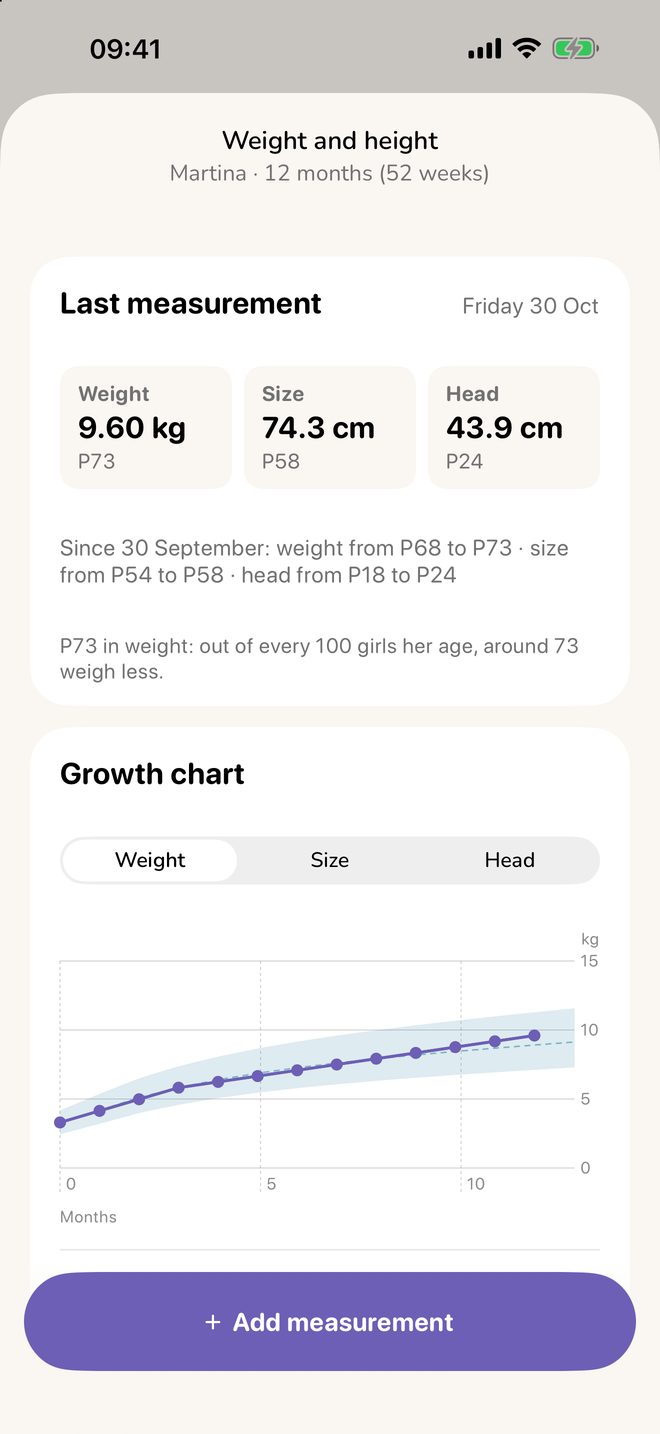
In Meceluna, the Baby tab keeps the measurements from each check-up on the WHO curves, and a note with the date of each new thing gives you a timeline you can take to the paediatrician on your phone.
Frequently asked questions
At what age does a baby sit up?
With support, around 6 months, and without support between 6 and 9 months, within a wide range.
At what age do babies take their first steps?
Between 8 and 18 months. Many walk alone around their first birthday or shortly after.
Is it bad if my baby does not crawl?
No. Some children shuffle on their bottoms, move along sitting or go straight to pulling themselves up.
When should you worry about a baby's development?
If your baby loses skills they already had, does not respond to sounds or to eye contact or you notice something odd, mention it to your paediatrician without waiting for the next check-up.
The essentials of Meceluna are free and have no ads.
Download on the App Store · iPhone