Infant colic: what we know and how to get through the evenings of crying
Colic is intense crying with no clear cause that starts around 2 or 3 weeks and usually fades by 3 or 4 months. It passes on its own, even if the evenings feel long.
Published on November 12, 2026.
Download on the App Store · iPhone
What it is and how to recognize it
We talk about infant colic when a healthy baby cries hard, in episodes that repeat mostly in the late afternoon or evening, with no hunger, dirty diaper, fever or other cause in sight. During an episode the baby turns red, pulls the legs up and is hard to soothe.
The classic definition is the rule of three: crying for more than 3 hours a day, more than 3 days a week, for more than 3 weeks. You don't have to meet it to the letter for it to be hard. It is very common and it is nobody's fault.
Putting a name on it is up to your pediatrician, who will first check that the baby is well, gaining weight and has no other problem.
How long it lasts
Colic usually appears between 2 and 3 weeks of life, peaks around 6 weeks and fades gradually by 3 or 4 months. For a premature baby, corrected age counts, so it can start and end a little later.
Knowing it has an end date helps more than it seems. Every week that goes by is one week less.
What often helps a little
No remedy works for every baby, and several of the ones going around are not backed by solid evidence. What does help many families is trying a few things and keeping whatever calms the baby:
- Holding the baby upright, or face down along your forearm, always supported and awake.
- A baby carrier, which gives contact and movement at once and leaves your hands free.
- A steady, monotone sound, like a fan or a song on repeat.
- Going for a walk, or rocking with a gentle, regular movement.
- A room with low light and little noise, so the baby isn't stimulated further.
If the baby takes a bottle, ask your pediatrician about positioning, nipple size and burping. Don't switch formula or cut foods out of the mother's diet on your own without checking first. To compare carriers, there is a baby carrier guide.
Taking care of the caregivers
Evenings of crying wear you down, even more when they come with little sleep. Agreeing on shifts helps: one of you takes the evening and the other rests with earplugs or goes out for a walk, and then you swap. Accept help from grandparents or friends, even for an hour.
There is one rule with no exceptions. If you feel overwhelmed, lay the baby on their back in the crib, step out of the room for a few minutes and breathe. A baby crying in a safe crib is fine. A baby is never shaken, not even a little and not out of desperation. If it gets hard, call someone or talk to your pediatrician or midwife.
When to see a doctor, because it may not be colic
Take the baby to the doctor, or to the emergency room if it's outside office hours, if the crying comes with any of these signs:
- A fever of 38 °C or more, especially under 3 months.
- Repeated vomiting, green or bloody vomit, or blood in the stool.
- A very hard or swollen belly, or refusing feeds.
- Not gaining weight, or being listless between episodes.
- A high-pitched cry unlike the usual one that doesn't let up.
If there is also a fever, see when to go to the ER with a baby.
What they ate and when, even if it's all crying
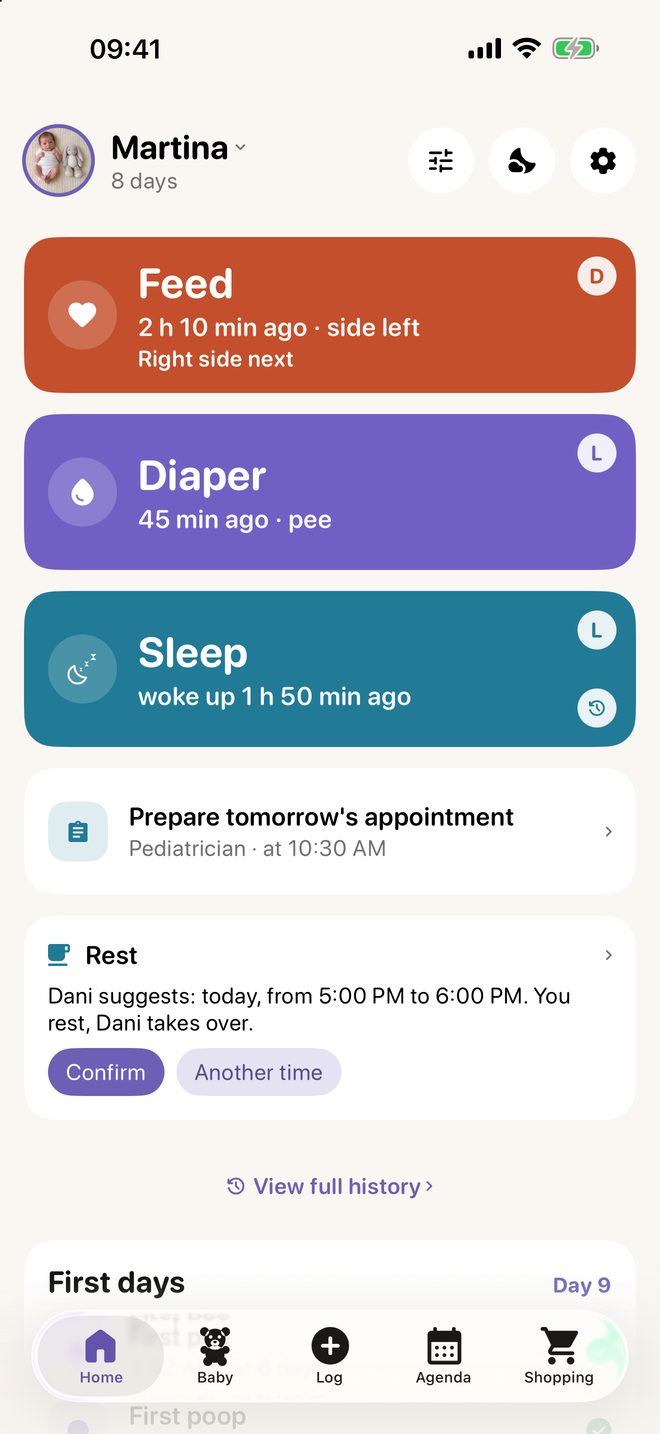
When everything is crying, it's hard to remember whether the baby already ate or when the last diaper was. In Meceluna, one of you logs it and the other sees it on their iPhone, and at night the screen dims so nobody wakes up. After a few days of logging you'll see how much the baby eats and sleeps, and you can show it to the pediatrician in the 7 or 14 day PDF, with a note on the hours of crying. How to log is in feeds, diapers and sleep. It only shows what was logged: what is going on with your baby is for the pediatrician to decide.
Frequently asked questions
At what age does infant colic start and end?
It usually starts around 2 or 3 weeks, peaks around 6 weeks and fades between 3 and 4 months.
Is colic painful for the baby?
Nobody knows for sure what causes it. What you see is intense crying that is hard to soothe and ends up passing on its own.
Should we switch formula if the baby has colic?
Not without checking first. If you suspect something in the feeding, your pediatrician decides after examining the baby.
What do I do if the crying is too much for me?
Lay the baby on their back in a safe crib, step out for a few minutes and breathe. Never shake the baby, and ask someone you trust for help.
The essentials of Meceluna are free and have no ads.
Download on the App Store · iPhone