Crib, bassinet or bedside sleeper: differences to help you choose
All three work for putting a baby to sleep; the size and the place you put them change. In any of them: firm mattress, on the back and no objects.
Published on November 20, 2026.
Download on the App Store · iPhone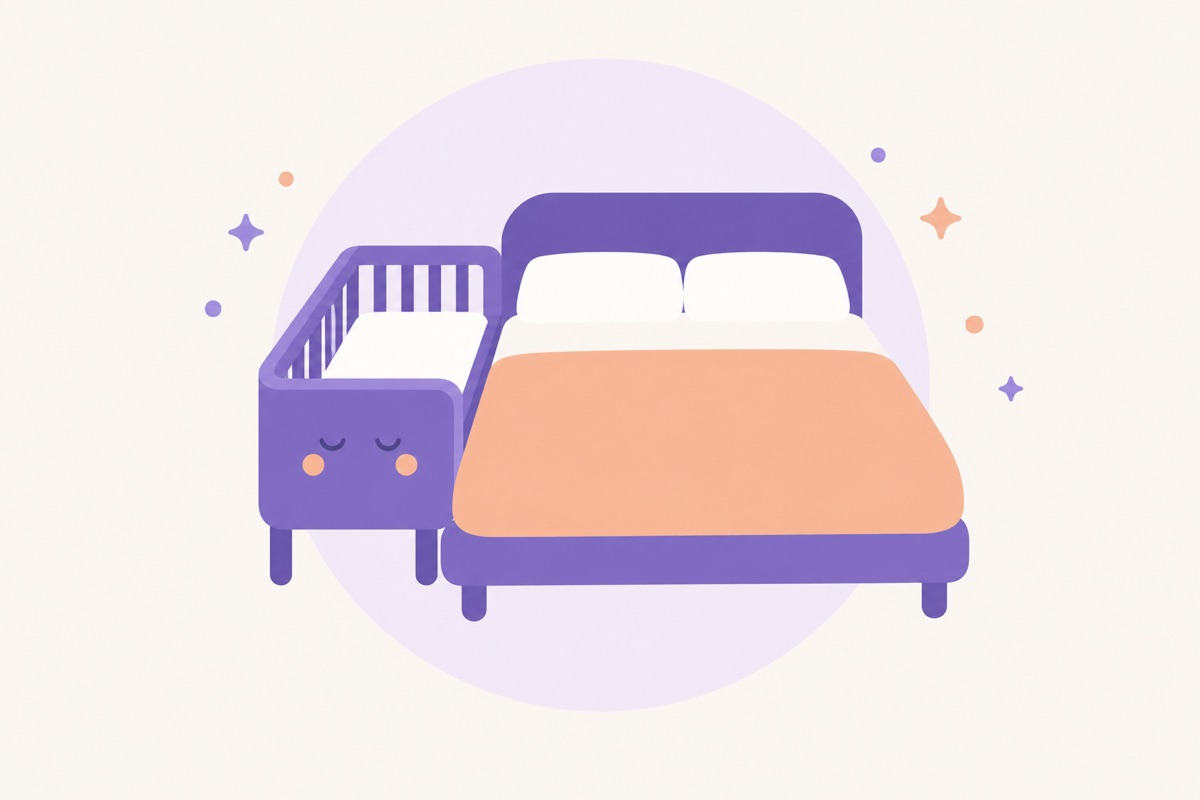
What each one is
The classic crib is the biggest: around 120 by 60 centimeters, it goes in the baby's room or yours and lasts until two or three years old, when the child starts climbing. It is the one that lasts longest.
The bassinet is smaller and portable. It moves from room to room, and some have wheels or a rocking base. Manufacturers rate it up to about 9 kilos or until the baby rolls over or sits up, usually around five or six months.
The bedside sleeper attaches to the side of the parents' bed, with one side open or that lowers. The baby sleeps on their own surface, right next to you, not in your bed.
If you start with the bassinet, decide now when you'll move to the big crib and where it will go, because around five or six months the baby starts to roll. With the crib set up or reserved, it isn't a rushed decision.
What the AEP says about safe sleep
The Spanish Association of Pediatrics (AEP) guidelines apply equally to any place where a baby sleeps:
- On the back, every time the baby sleeps.
- A firm, flat mattress that fits the crib.
- No pillows, stuffed toys, cushions or loose blankets.
- No overheating the room.
- No tobacco smoke in the home.
The AEP recommends that for the first six months the baby sleeps in the parents' room, but in their own crib. More at aeped.es, and the article on safe sleep goes into detail.
Bedside sleeper and adult bed
A bedside sleeper is not sleeping with the baby in your bed. It has its own mattress, right against the bed, which makes it easier to follow the safe sleep rules. Check that the join with the bed leaves no gaps and that the crib mattress sits at the same level or slightly below.
Sleeping with the baby in the adult bed has risks that the AEP spells out, and they go up with tobacco, alcohol, medications that cause drowsiness, the sofa or a premature or very small baby. If you're considering it, talk with your pediatrician or midwife first.
How to decide between the three
Three things: the size of your bedroom, how long you want it to last and whether the baby has to be moved around the house. With little space, a bassinet or a bedside sleeper fits better, though it is outgrown sooner. For a single purchase, the classic crib.
There are convertible cribs that turn into a small bed and models that combine bedside and regular crib. They cost more, but they pay off. Check that the mattress can be replaced and that the base has several heights, so you can lower it when the baby starts to sit up.
What to check before buying
The European standard label: UNE-EN 716 for cribs and UNE-EN 1130 for bassinets and cradles. Between bars, 4.5 to 6.5 centimeters, and no protrusions where clothing can catch.
The mattress should be firm, breathable and with no gaps at the sides, so that no more than two fingers fit. And better new.
Comparing them in the baby list
Save the two or three options in the baby list: each product page has measurements and prices at several stores, and the two of you decide on your iPhones with the same data. Once the baby is sleeping, the sleep log counts how many hours and at what time, with no advice or predictions.
Frequently asked questions
How long is a bassinet used?
Until the baby reaches the weight the manufacturer indicates, usually about 9 kilos, or until the baby rolls over or sits up, around five or six months.
What is the difference between a bedside sleeper and sleeping with the baby in bed?
A bedside sleeper is a separate surface attached to the bed. Sleeping in the adult bed has risks that the AEP spells out, especially with tobacco, alcohol or a premature baby.
What gap should a crib have between bars?
Between 4.5 and 6.5 centimeters under European regulations, so that the baby can't get their head through or become trapped.
Where should a newborn sleep?
According to the AEP, in the parents' room for the first six months, but in their own crib, on the back and on a firm mattress.
The essentials of Meceluna are free and have no ads.
Download on the App Store · iPhone